I've watched a lot of teams make decisions under pressure. Boardrooms, offsites, the quiet tension of a call that everyone knew mattered more than the agenda let on. And after enough of these rooms, a pattern started to repeat itself so consistently that I stopped writing it off as coincidence.
The teams with the most talent in the room are not always the teams that move.
That should surprise us more than it does. These are smart people. Accomplished, credentialed, used to solving hard problems for a living. They've read the books, sat through the trainings, built careers on making good calls. And yet the moment the stakes actually rise, something in the room seizes up. Conversations get careful. Opinions get vague. Everyone starts speaking in probabilities instead of positions. The meeting that was supposed to produce a decision produces another meeting instead.
If intelligence were the answer, this wouldn't happen. So it isn't intelligence. It's something else, and it's worth naming.
The freeze isn't a thinking problem
Here's what I've come to believe after watching this play out again and again, including in some very unexpected settings. The freeze doesn't happen because people can't figure out the right answer. It happens because they've stopped trusting that the room can hold their answer well.
Think about what actually happens inside a high-stakes conversation. Someone has a strong opinion, but they hedge it, because they're not sure how it will land with the person two seats down. Someone else sees a problem forming, but stays quiet, because raising it feels like criticizing a colleague's work in front of the whole team. A third person genuinely doesn't know the answer, but performs confidence anyway, because admitting uncertainty at this level feels like a liability instead of an honest data point.
None of this is cowardice. It's self-protection, and self-protection is a completely rational response to a room where honesty hasn't been proven safe yet.
The tragedy is that this happens most on the executive teams that can least afford it. The higher people rise, the more they have to lose by being wrong out loud, and the more practiced they become at looking composed instead of being direct. Composure starts to substitute for clarity. And a room full of composed, careful, unreadable people cannot make a fast decision together, no matter how sharp any one of them is individually.
What actually separates the teams that move
The teams that move under pressure aren't the ones with the smartest individuals. They're the ones who already know, before the pressure ever shows up, exactly how the group behaves when things get hard.
They know who goes quiet when they disagree, and they've learned to ask that person directly instead of waiting for volunteered honesty. They know which two people will default to conflict avoidance and let a bad plan slide rather than name what's wrong with it. They know their own habit, whether it's talking too much to fill silence, or going silent to avoid looking unsure, or needing to be the one who's right.
That kind of self-knowledge and team-knowledge doesn't get built in a quarterly offsite icebreaker. It gets built by putting a team in a situation honest enough that those patterns show up in real time, where they can actually be seen and named, rather than in the middle of a live decision where the cost of seeing them clearly is suddenly very high.
This is, frankly, one of the most useful things I've learned from an unlikely teacher.
What horses taught me about the freeze
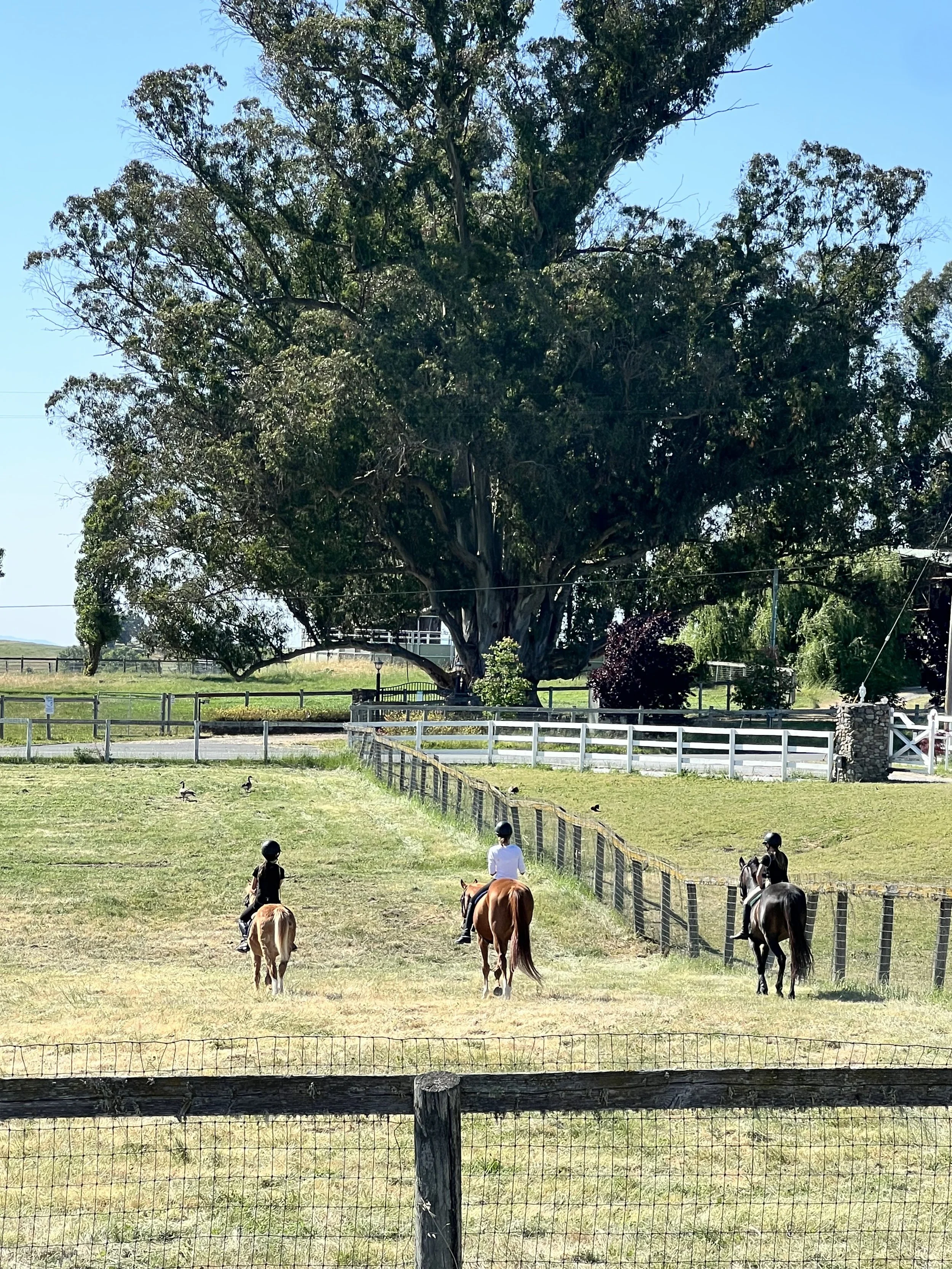
I spend a lot of my time around horses, and if you've never worked closely with one, here's something that will sound strange until you've felt it. A horse does not respond to your title, your track record, or how convincing you sound. It responds to what's actually true about your state in that moment, your tension, your hesitation, your incongruence between what you're saying and what your body is doing.
I have watched extremely accomplished, decisive executives walk up to a horse and completely stall. Not because the task was hard. Leading an animal a few steps forward is not hard. They stalled because for the first time in a long time, they were in a situation where their usual tools, their title, their certainty, their ability to talk their way to a conclusion, simply didn't work. The horse wasn't buying it. And in that gap, you could watch the exact same freeze that happens in a high-stakes boardroom moment, except now it was visible, physical, and impossible to explain away.
That's the value in it. Not the horse itself, but the mirror. Most leadership breakdowns are invisible until the cost has already been paid. This makes them visible while the cost is still low, in a setting where a stalled decision just means the horse takes a few extra minutes, not a missed quarter or a fractured executive team.
Once a leader sees their own freeze clearly, named and specific rather than vague and defensive, they can't unsee it. And more importantly, they start recognizing it in the room the next time it happens at work.
The real work isn't about being smarter
Nobody on a high-performing executive team needs to get smarter. They need to trust the room enough to say the true thing before it's the safe thing, and they need enough self-awareness to catch themselves in the moment they start protecting their image instead of protecting the decision.
That's not a skill you build by discussing it in the abstract. It's a skill you build by practicing it somewhere real, somewhere the stakes are low enough to be honest and high enough to matter, until it becomes reflex instead of effort.
The teams that move when it counts aren't the ones who never freeze. They're the ones who've already learned what their freeze looks like, and who trust each other enough to call it out before it costs them anything.
That's the work. And it starts long before the moment you actually need it.
Ready to See How Your Team Responds Under Pressure?
The patterns that slow down decision-making rarely appear in a conference room until the stakes are high. Our horse-guided leadership experiences create a space where those patterns become visible, allowing your team to build trust, communicate more directly, and make better decisions together.
Schedule a discovery call to learn how Strides Leadership can design a leadership experience for your executive team.