Every executive I talk to says they want a high-trust team.
I believe them. I don't think anyone is lying when they say it. But then I watch them run a hard meeting, the kind with real stakes and a decision that has to actually get made, and I see something completely different than what they told me they wanted.
That gap is the most honest thing in the entire organization. It just usually goes unexamined, because nobody's watching for it, and the people in the room are too busy managing the moment to notice what the moment is revealing.
Trust is easy to claim and hard to run
Ask a leadership team if they value trust and every hand goes up. It's one of those words that's basically impossible to disagree with in the abstract, right up there with communication and alignment. Nobody's ever said, out loud, in a strategy session, "actually, I'd prefer we trust each other less."
But trust isn't a value you hold. It's a behavior you demonstrate, specifically in the moments where demonstrating it costs you something. And the moments that cost the most are exactly the ones I'm talking about, the hard meetings, the ones with a deadline attached and a wrong answer that's expensive.
That's where I actually learn what a team believes about trust, not from what they tell me in a discovery call, but from what I watch happen the first time real pressure walks into the room.
What I actually see in a hard meeting
Here's the pattern, and I've watched it enough times now to know it isn't a coincidence.
The most senior person in the room speaks first, and often speaks longest. Not because they have the most useful information, but because hierarchy makes the first word feel safe for them and risky for everyone else. Once that opinion is on the table, something shifts. Fewer people push back. Questions get softer. What could have been a real disagreement turns into a series of careful nods and a couple of gently phrased alternatives that quietly die before they're fully said out loud.
Somebody in the room almost always sees the actual problem. I've asked them afterward, privately, and they'll tell me exactly what was wrong with the plan, sometimes in more detail and with more clarity than anyone offered in the meeting itself. When I ask why they didn't say it in the room, the answer is almost never "I didn't think of it." It's some version of "it wasn't my place," or "I didn't want to be the one who slowed things down," or "I figured someone more senior would say something if it really mattered."
That's not a high-trust team. That's a team that has learned, through repeated experience, exactly how much honesty the room can actually hold, and it's less than they claim.
The tell isn't what people say. It's what they protect.
If you want to know what a team actually trusts, don't listen to their stated values. Watch what they protect under pressure.
Some people protect the relationship, and go quiet rather than risk friction. Some protect their own standing, and hedge their opinion so it can't be used against them later. Some protect the timeline, and let a flawed plan move forward because stopping it would mean admitting the team is further behind than anyone wants to say out loud. Every one of those instincts is completely rational. None of them require bad intent. But none of them are trust in action either, and a team can say "we trust each other" in every offsite for a decade while every hard meeting quietly proves otherwise.
The uncomfortable part is that this gap is usually invisible to the leader running the meeting. They experience the meeting as smooth. Everyone agreed, decisions got made, the room felt calm. What they don't see is the version of the conversation that didn't happen, the disagreement that got swallowed, the concern that got softened into something forgettable. A quiet room isn't the same thing as an honest one, and mistaking one for the other is how good executive teams end up genuinely surprised when a decision they were "aligned on" falls apart three months later.
What closes the gap
This is the part that matters, because naming the gap without offering a way through it isn't useful. It's just diagnosis.
Closing the gap between stated trust and demonstrated trust doesn't happen through a values statement or a better mission deck. It happens by putting a team in a real situation, with real stakes, where the cost of honesty is actually tested, and where people get to watch what happens when someone tells the truth under pressure and nothing bad occurs to them for it.
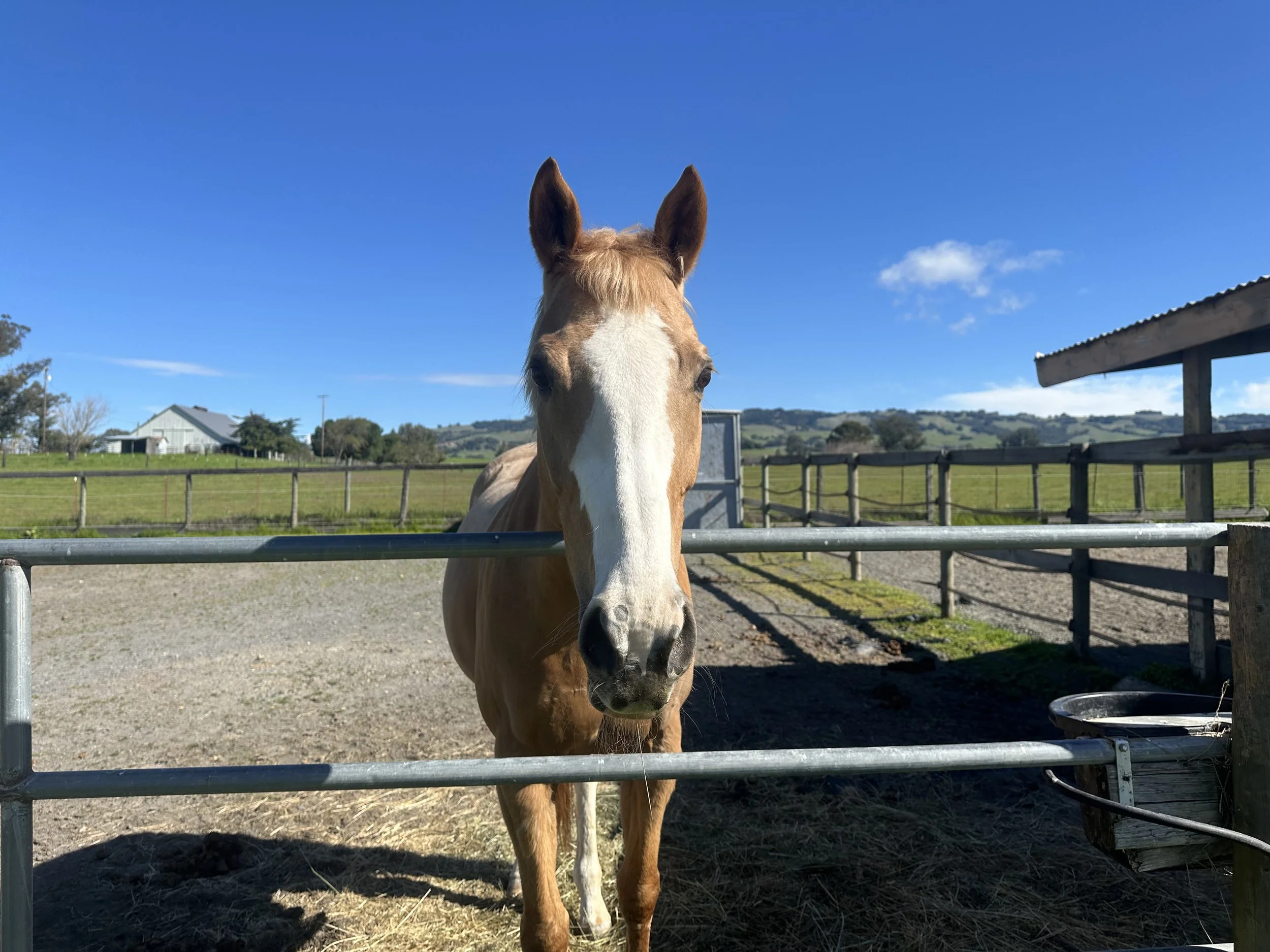
That's the entire mechanism behind the work I do now. I don't run trust exercises. I create moments where trust either shows up or it doesn't, and the team gets to see the difference in real time. When you put an executive team in front of a horse, that animal has no idea who's the CEO and no interest in anyone's title. It responds only to what's true about the person in front of it right now. Leaders who talk over people in meetings often find the horse won't cooperate with that same energy. Leaders who defer and soften discover the horse won't move without more clarity than they're used to giving. It's not a metaphor I'm imposing on the experience. It's what actually happens, every time, and it's the fastest and most honest way I've found to show a team the real distance between what they say about trust and what they practice.
Once a leader sees that gap clearly, named specifically instead of gestured at vaguely, they can't unsee it back at the office. They start noticing the meeting where they spoke first and shut the room down without meaning to. They start asking the quiet person directly instead of waiting for volunteered honesty. That's what closes the gap. Not another values conversation, but a real one, followed by the discipline to keep having it.
Every executive I talk to wants a high-trust team. The ones who actually get one are the ones willing to find out, honestly and sometimes uncomfortably, what their team currently trusts more than they'd like to admit.
Ready to Build a High-Trust Leadership Team?
High-performing teams aren't defined by what they say about trust. They're defined by how they communicate, make decisions, and respond when the stakes are high.
If you're ready to uncover the patterns shaping your team's performance and build stronger trust where it matters most, we'd love to help.
Reach out today to learn how a Strides Leadership retreat can help your executive team strengthen communication, improve decision-making, and lead with greater confidence.